



Table of Contents
ToggleTurning over a rental property comes with one non-negotiable task: getting the carpet spotless. Tenants notice stains immediately, and prospective renters make quick judgments based on cleanliness. Whether you’re managing a single-family home or a multi-unit building, investing in the right carpet cleaner saves money, time, and reputation in the long run. The challenge isn’t finding a machine, it’s knowing which type fits your budget, your property’s square footage, and the level of grime you’re tackling between occupants.
Key Takeaways
- A carpet cleaner for rental properties is essential for tenant satisfaction and lease applications, as clean carpet directly influences first impressions and justifies higher rental rates.
- Portable carpet cleaners ($300–$600) work best for spot treatments and light cleaning of 1–2 rooms, while upright cleaners are more cost-effective for frequent use across multiple rental units.
- Tank capacity, heating systems, hose length, and suction power are critical features—look for at least 2–3 gallon solution tanks and built-in boilers to maintain hot water temperature throughout cleaning.
- Buying used or refurbished carpet cleaners from Facebook Marketplace or estate sales ($150–$400) is the most budget-friendly option for landlords cleaning more than 2–3 times yearly.
- Proper maintenance between rentals—including thorough vacuuming, systematic overlapping passes, and flushing equipment with clean water—extends carpet and machine lifespan while preventing mold and odors.
- Document carpet condition with before-and-after photos to protect against security deposit disputes and demonstrate property maintenance standards to prospective tenants.
Why Carpet Cleaning Matters for Rental Properties
Dirty carpet is a deal-breaker for tenants. First impressions drive lease applications, and even a spotless kitchen loses its appeal when tenants see matted, stained carpet in the bedroom. Beyond tenant satisfaction, regular deep cleaning extends carpet life by removing abrasive dust and grit that work into fibers.
From a business perspective, professional-looking turnovers justify higher rental rates and reduce vacancy periods. Landlords who skip deep cleaning between tenants often lose deposits to cleaning disputes or face lower renewal rates. The cost of a good carpet cleaner pays for itself in retained rent and avoided conflicts. Building a reputation as a landlord who maintains clean properties also attracts more reliable applications.
Types of Carpet Cleaners for Rental Use
Portable Carpet Cleaners
Portable cleaners are lightweight, compact machines ideal for spot-treating stains and cleaning small to mid-sized rooms. They typically weigh 15–20 pounds and fit into a car trunk, making them practical for landlords managing multiple properties. These machines use hot-water extraction (also called steam cleaning), where hot water and cleaning solution spray into carpet fibers while suction pulls out dirt and moisture.
Portables work best for maintenance cleaning or light soiling. They’re slower than upright models, covering a bedroom takes 30–45 minutes, but the initial investment is lower, often $300–$600 for a quality unit. Models like the Bissell Little Green are commercial-grade workhorse machines found on rental shelves everywhere. The trade-off: small tanks mean frequent refills, and suction power isn’t as aggressive for heavily soiled carpet.
Upright Carpet Cleaners
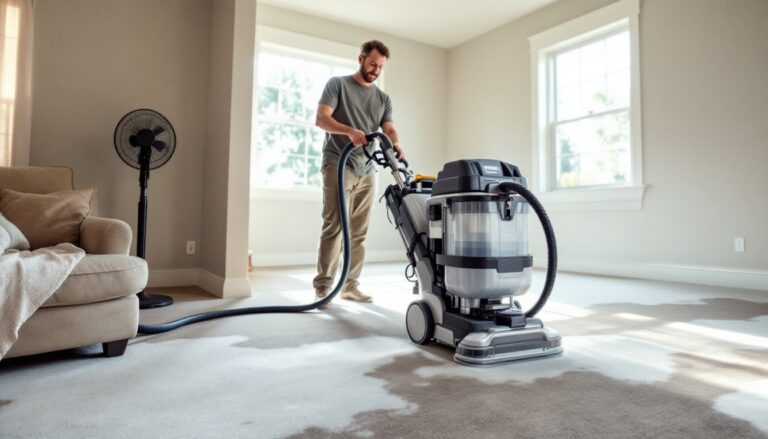
Upright cleaners are larger, rolling machines that look like traditional upright vacuums but operate as deep cleaners. They’re designed for larger jobs and commercial use. These machines deliver better suction, wider cleaning paths (usually 12–14 inches), and larger tanks, so you’re not stopping constantly to refill.
An upright cleaner can handle a 1,500-square-foot home in 2–3 hours, compared to 4–5 hours with a portable. They’re better suited for rental properties with multiple bedrooms or significant staining. Rental costs run $50–$100 per day at hardware stores, making them cost-effective if you’re cleaning several units monthly. The downside: they’re heavy (40–60 pounds), harder to maneuver around stairs, and require dedicated storage or rental pickup. For landlords cleaning quarterly across 3+ properties, buying a used upright is often smarter than repeated rentals.
Essential Features to Look for in a Rental Carpet Cleaner
Tank capacity is the first spec to check. Machines with 1-gallon solution tanks and 1.5-gallon recovery tanks require frequent refills, wasting time. Look for cleaners with at least 2–3 gallon solution tanks and 4+ gallon recovery tanks to handle a full room without stopping.
Heating system matters for extraction power. A built-in boiler maintains water temperature throughout cleaning, preventing the machine from spraying cool water partway through. Portable cleaners often lack on-board heating, meaning you’re relying on tap-water temperature. That’s a significant drawback: hot water (160°F+) cuts through oily residue and dust far better than lukewarm.
Hose length and cleaning head affect reach and maneuverability. A 25-foot hose lets you work from a hallway without dragging the machine. A wide, flat cleaning head (12+ inches) covers ground faster than narrow heads.
Suction and water lift determine how dry the carpet dries after cleaning. Better suction pulls more water out, speeding dry time to 3–4 hours instead of 8–12. This is critical for turnovers, you need carpet dry before new tenants move in.
Portability vs. power: You’re choosing between convenience and performance. Portables win if you clean fewer than four times yearly: uprights or rental machines make sense for frequent use. When renting, essential tips for renting carpet cleaning machines can help you navigate daily rates and equipment condition before committing.
Budget-Friendly Carpet Cleaning Options for Landlords
Buying used or refurbished is the most cost-effective route for frequent cleaners. Facebook Marketplace, OfferUp, and estate sales often have older Bissells and Hoover uprights for $150–$400. Check the motor (it should hum smoothly) and run it on a scrap of carpet to confirm suction. Used machines may need a cleaning head brush replacement ($30–$50), but that’s still far cheaper than new.
Renting from hardware stores works well for one-off cleanups. Home Depot and Lowe’s rent quality upright machines for $40–$60 per day. The advantage: no storage headaches and the rental company maintains the equipment. The catch: if you’re cleaning more than 2–3 times yearly, the cumulative rental costs exceed buying a used machine outright.
Sharing or co-owning with other landlords in your area can spread costs. If three landlords each own one cleaner and rotate, everyone saves on storage and maintenance. Set a simple log for tracking use and scheduling.
Bulk cleaning services for larger turnovers sometimes cost less than DIY rental. A professional cleaner might charge $200–$400 for a 1,500-square-foot rental, while a day-rental machine plus your labor totals $60–$80 in direct costs but 4–5 hours of your time. For landlords managing 10+ units, outsourcing beats ownership. Cleaning hacks and strategies often highlight the time-value trade-off between renting equipment and hiring professionals.
Cleaning and Maintenance Tips Between Rentals
Pre-cleaning preparation determines success. Vacuum thoroughly first, loose dirt clogs the cleaning head and reduces suction. Move furniture, pick up small objects, and address obvious stains with a pre-treat spray 10 minutes before running the machine.
Fill solution tanks with hot tap water and a recommended carpet-cleaning agent (not dish soap, which foams excessively). Always use the manufacturer’s dilution ratio: too much soap leaves residue and attracts dirt faster.
Work systematically, overlapping each pass by 25 percent. Starting from the far corner, work backward toward the door so you’re not walking over wet carpet. For stairs, work the treads last, they’re steeper and wetter longer.
Dry time is critical for rental turnover. Open windows or run fans to speed evaporation. If you rented a machine, dry carpet thoroughly before returning it: moist carpets smell and promote mildew. A wet/dry shop vac ($50–$150) is a landlord’s best friend, run it over the carpet after cleaning to extract extra moisture.
After use, flush the machine’s hoses and tanks with clean water. Dried cleaning solution hardens and clogs nozzles. Leaving solution residue in tanks promotes mold and bacteria growth, shortening the machine’s lifespan. Store in a dry, cool place. If storing long-term, run a cleaning cycle with plain water to purge all solution.
Document the before and after. Take photos of carpet condition before cleaning and after dry time. If a security deposit dispute arises, that documentation proves you’ve maintained the property to rental standards. Home improvement resources and guides often include photographic documentation tips for maintenance records.