




Table of Contents
ToggleWhether you’re hosting a catering event, stocking a temporary food service operation, or managing a pop-up restaurant, the last thing you want is a refrigeration failure mid-service. Buying commercial-grade cooling equipment outright is expensive, takes up permanent space, and ties up capital. Commercial refrigerator rental offers a flexible, cost-effective solution that lets you scale cooling capacity up or down based on immediate demand. This guide walks you through the rental landscape, helping you understand your options, compare costs, and make an well-informed choice for your next project or event.
Key Takeaways
- Commercial refrigerator rental eliminates the $3,000–$20,000+ upfront investment of buying equipment while avoiding installation, maintenance, and long-term liability costs.
- Reach-in units work best for tight spaces and quick access at events, while walk-in coolers handle high-volume storage for larger catering operations and temporary venues.
- Calculate peak storage needs—not average demand—and measure your venue for proper clearance, electrical access, and ventilation before selecting a rental unit.
- Rental pricing ranges from $150–$500 weekly for reach-in units to $500–$1,200 weekly for walk-ins, with monthly rates offering better value than daily rates across most markets.
- Review rental contracts carefully for what ‘basic maintenance’ covers, damage liability terms, required security deposits, and cancellation windows before signing any agreement.
- Choose a commercial refrigerator rental provider offering delivery, setup, and 24/7 support to ensure food safety compliance and minimize downtime during your event or seasonal operation.
Why Rent Instead of Buy a Commercial Refrigerator
Buying a commercial refrigerator is a substantial investment. A quality walk-in cooler or reach-in unit can run $3,000 to $20,000+ depending on size and features. Add installation, electrical upgrades, and maintenance contracts, and you’re looking at a five-figure commitment before the unit ever cools a single item.
Renting flips that equation. You pay a weekly or monthly fee, typically $150 to $500+ for standard units, without ownership costs, installation headaches, or long-term maintenance liability. The rental company handles delivery, setup, repairs, and removal when you’re done. This model works beautifully for seasonal demand, temporary venues, event catering, or testing whether you actually need permanent cooling capacity.
Rental also sidesteps the storage and space problem. If you run events sporadically or your business fluctuates seasonally, keeping an idle refrigerator consuming electricity year-round makes no sense. Rent during the months you need it, rent a larger unit during peak season, and pay nothing during downtime. This flexibility alone saves many small operations thousands annually.
Types of Commercial Refrigerators Available for Rental
Reach-In and Walk-In Models
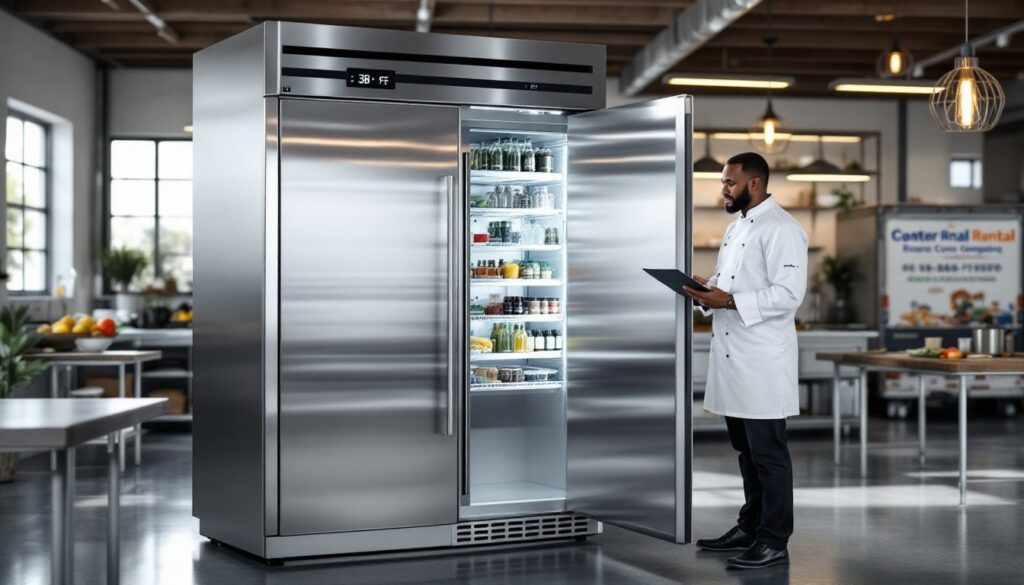
Reach-in refrigerators are the compact workhorses you’ve probably seen behind restaurant counters. These typically measure 27 to 48 inches wide, 30 inches deep, and 65 to 70 inches tall. They’re ideal for food prep areas, event bars, or small catering setups where space is tight and quick access is essential. Interior capacity usually ranges from 10 to 20 cubic feet. Reach-in units are ready to plug in and operate immediately, minimal installation fuss and no structural modifications needed.
Walk-in coolers go the other direction: modular boxes that can be assembled on-site and sized to fit your space. A typical 6 feet by 8 feet walk-in holds around 45 cubic feet and serves larger events, grocery situations, or operations needing serious volume. Walk-ins require a level floor, proper electrical connection, and 24 to 48 hours for assembly and temperature stabilization. They’re the choice when you’re feeding hundreds or managing significant inventory for weeks at a time. Some rental companies offer them pre-assembled and ready to operate on delivery: others require onsite construction by a technician.
Specialty Cooling Solutions
Beverage coolers and under-counter units handle specific niches. A beverage cooler holds bottles and kegs at chilled temperatures but doesn’t cool to the 41°F or below required for raw proteins and perishables. These work for events focused on drinks or for holding pre-chilled ingredients. Under-counter units fit beneath prep tables and save counter space in tight kitchens.
Freezers are also available for rental, essential if you’re holding frozen desserts, ice cream, or pre-prepped frozen proteins. Temperature control varies, reach-in freezers typically hold 0°F to -10°F, while walk-in freezers offer similar cold storage at scale. Some rental vendors stock dual-temperature units (part refrigerator, part freezer) if your event needs both. Confirm temperature capability and shelf configuration before booking: specialty items sometimes require specific holding conditions.
How to Choose the Right Rental Unit for Your Needs
Start with a simple question: what are you actually cooling, and for how long? If you’re catering a single 200-person wedding, a reach-in unit or small walk-in for a weekend might suffice. If you’re running a temporary food truck for a month-long festival, you need higher capacity and endurance. Calculate the volume of food you’ll store at peak times, not average times. Running out of space mid-service is worse than paying slightly more for extra capacity.
Next, measure your venue or workspace. A reach-in unit needs a spot near an outlet: walk-ins need a level floor, 36-inch clearance on at least one side for door swing, and proper ventilation (air must circulate around the condenser coils). If your venue is outdoors or in an uncontrolled environment, confirm the unit’s operating temperature range. Most commercial units perform reliably between 50°F and 90°F ambient: hotter or colder conditions may require premium models or extra cooling assistance.
Duration matters for pricing. Rental companies typically offer daily, weekly, and monthly rates, with significant discounts as rental length increases. A three-day weekend event and a month-long pop-up cost per-day very differently: monthly rates are better value. Ask about minimum rental periods and any setup or delivery fees bundled into the quote. Speaking with vendors on home service platforms like Angi can help you compare local providers and read customer reviews before committing. Also specify delivery and pickup logistics, some companies include them: others charge extra if you’re outside their standard service area.
Understanding Rental Costs and Contracts
Rental pricing varies widely by region, unit type, and season. A weekly reach-in refrigerator rental in a major city might cost $200–$400, while a walk-in cooler could run $500–$1,200 per week. Peak season (summer, holidays) often carries premiums: off-season rates dip. Always request a detailed quote, don’t assume that advertised rates include delivery, insurance, or service calls.
Read the rental contract carefully. Most include basic maintenance and repairs at no charge, but clarify what “basic” covers. Is a refrigerant recharge included if the unit loses cooling? Are filters and door seals replaced as standard? What’s the damage liability if you accidentally crack a panel or damage the door? Some companies require a security deposit, sometimes $500–$2,000, refundable if the unit returns in good condition.
Insurance and liability are critical. If your event is catered, check whether your caterer’s liability policy covers rented equipment, or confirm the rental company’s insurance applies. If you’re responsible for food safety and the unit malfunctions, a temperature-logging device (data logger) provides evidence of compliance for health inspectors. Some rental vendors offer these for a small fee: it’s worth asking. Contract terms typically specify a cancellation window (usually 7–14 days) before charges apply, so read those terms if plans might change. Comparing rental quotes across platforms like Houzz, which lists local contractors and service professionals, or checking home improvement resources for vendor recommendations can also help you find reliable, fairly-priced options in your area.
Conclusion
Commercial refrigerator rental removes the capital burden and commitment of ownership, making it the smart choice for temporary, seasonal, or variable cooling needs. Match your unit type and size to actual demand, plan for delivery and setup time, and scrutinize contracts for hidden fees and liability terms. With the right vendor and preparation, you’ll keep your food safe, your guests happy, and your budget in check.