

Table of Contents
ToggleLaundry day used to mean choosing between a dedicated laundry room or accepting a cramped, inefficient setup. Stackable washer and dryer rental has changed that equation for thousands of homeowners. Instead of committing to a $2,000+ purchase or tearing into walls to fit full-size appliances, renters can now flex, quite literally, with compact, high-performing units that fit vertical spaces and adapt to life changes. This guide walks you through what stackable rental units are, why they’re gaining traction in 2026, and how to evaluate providers, plan installation, and keep your rental running smoothly.
Key Takeaways
- Stackable washer and dryer rental eliminates space constraints by fitting a 27-inch-wide by 32-inch-deep footprint in closets, kitchens, bathrooms, or bedrooms, making it ideal for apartments and smaller homes.
- Renting a stackable unit for $30–$60 per month removes the $1,200–$2,000 upfront purchase barrier and shifts maintenance responsibility to the provider, protecting you from repair costs and depreciation risk.
- Choose rental providers that offer delivery, installation, and maintenance included, with repair turnaround not exceeding 48 hours, and clarify contract terms regarding early termination fees and coverage details.
- Ventless (heat pump or condensation) dryers are preferred in rentals because they require no ductwork or home modifications, while vented options work best if your duct run is under 25 feet.
- Routine maintenance—cleaning detergent dispensers, emptying lint traps, running monthly cleaning cycles, and using HE detergent—is your responsibility and essential to preserve warranty coverage and avoid damage fees.
- Proper water connections, electrical requirements (typically 120-volt for compact units), and unit leveling with 6 inches of clearance on all sides ensure safe operation and prevent leaks or service issues.
What Is Stackable Washer And Dryer Rental?
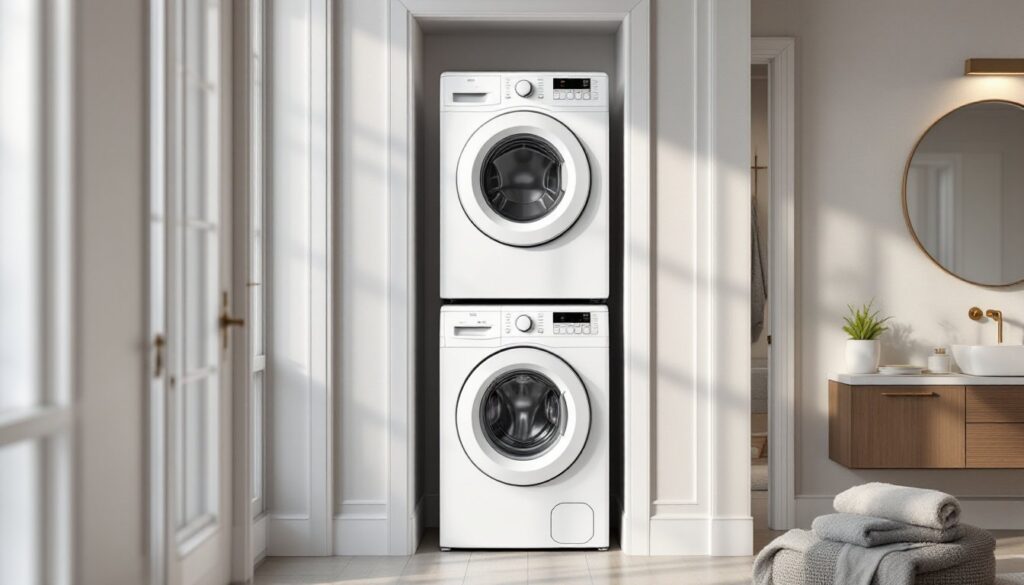
A stackable washer and dryer rental is a compact laundry solution where the dryer sits directly on top of the washer, cutting the footprint nearly in half compared to side-by-side units. Instead of buying outright, you rent the equipment from a provider who handles delivery, installation, maintenance, and repairs for a monthly fee, typically $30 to $60 per month depending on the model and your region.
These units come in two main configurations: ventless dryers (heat pump or condensation models that require no ductwork) and vented dryers (which need a vent to the outside). Ventless options are especially popular in rentals because they demand minimal installation work and don’t require modification to your home’s exterior or HVAC system.
Modern stackable units are far from the anemic performers of years past. Leading manufacturers now pack smart features, moisture sensors, app controls, and energy-efficient cycles, into compact form factors. You’re getting decent capacity (usually 4 to 5 cubic feet for both washer and dryer) without the footprint of a traditional 5+ cubic foot full-size set.
Why Renters Are Choosing Stackable Units Over Traditional Setups
Space And Layout Advantages
The biggest draw is obvious: space. A stacked unit occupies roughly a 27-inch-wide by 32-inch-deep footprint (the actual depth varies by model). That’s almost the size of a standard doorway. You can fit stacked units in closets, kitchens, bathrooms, under stairs, or even bedrooms without needing a dedicated laundry room.
Renters in apartments, condos, and smaller homes often face hard limits on space. A traditional side-by-side setup demands a 5-by-7-foot corner minimum. A stackable unit eliminates that constraint entirely. Homeowners who’ve added ADUs (accessory dwelling units) or converted rooms also benefit from stackables because they don’t monopolize square footage.
Beyond pure footprint, stacked dryers run quieter and vibrate less than their full-size cousins, so placing one in a living space or bedroom is more feasible.
Cost Flexibility For Homeowners
Rental removes the capital barrier. A quality stackable washer-dryer combo costs $1,200 to $2,000 upfront. Renting at $40 per month means you break even around 30 to 50 months, but you’re also freed from ownership risk. If something fails, the rental company covers it. If you move or want to upgrade, you walk away instead of liquidating used appliances or absorbing depreciation.
For homeowners testing a renovation, moving within the next few years, or just keeping cash liquid, the monthly flexibility wins. Some rental agreements also bundle haul-away and recycling of your old machines, avoiding additional fees and hassle.
Finding The Right Rental Provider For Your Home
Your rental provider is the lynchpin. Start by checking which companies operate in your area, national players like Aaron’s, Rent-A-Center, and Aarons often stock stackable units, but regional appliance rental specialists may offer better rates and service.
Read reviews on independent sites and check the company’s response to warranty and repair requests. Average repair turnaround shouldn’t exceed 48 hours: if a provider regularly misses that window, keep looking. Ask whether they handle delivery, installation, and hookup at no extra charge, or if you’re eating labor costs on top of the monthly fee.
Compare what’s included in the rental: Do they cover all repairs? Are filter and part replacements free? Some providers charge a small fee for specific parts or service calls if damage isn’t deemed a manufacturing defect. Clarify the fine print before signing.
Also confirm the contract terms. Most rentals lock you in for 12 months, though some offer month-to-month after an initial period. Ask about early termination fees, usually 25 to 50% of remaining contract value. If you’re unsure about your timeline, negotiate a shorter commitment upfront, even if the monthly rate is slightly higher.
Top-performing stackable models from 6 best stackable washer and dryer options include smart-enabled units with moisture sensors and app controls, which can help you monitor cycles and troubleshoot issues remotely.
Installation And Setup Considerations
Most rental providers handle delivery and basic installation, but it’s worth understanding what “basic” means. Typically, they’ll unbox, position the unit, and connect it to your existing water and vent hookups if available. If your space requires custom venting, drain modifications, or electrical upgrades, expect additional charges or a referral to a licensed contractor.
Water connections are straightforward. The washer needs a hot and cold water inlet (standard 3/4-inch NPT threads) and a drain line (1.5 to 2-inch diameter hose running to a sink, sump, or standpipe). If your hookups are outdated or missing, a plumber’s visit ($150–$300) is worth the investment to avoid leaks and liability issues.
Electrical requirements depend on your unit. Most compact stackables run on standard 120-volt, 15-amp household current, though some higher-capacity models need 240 volts. Check your panel: if you’re short on circuits, you may need a licensed electrician to add one.
Venting is critical if you’re using a traditional vented dryer. A ductless (heat pump or condensation) dryer eliminates this step, but vented models must exhaust to the outside. Run flexible or rigid 4-inch aluminum duct with as few turns and bends as possible, each bend adds friction and reduces drying efficiency. Ductwork longer than 25 feet degrades performance significantly: if your venting run is long or complex, a condensation dryer is smarter.
Leveling and clearance matter, too. Use a spirit level and adjust the unit’s feet so it sits square. Allow at least 6 inches of clearance on all sides for airflow and service access. Resources like HomeAdvisor’s project planning guides offer step-by-step walkthroughs if you’re handling any prep work yourself.
Maintenance And Care During Your Rental Period
Even though the rental company covers major repairs, you’re responsible for routine upkeep. Neglecting maintenance voids warranties and can trigger damage fees when you return the equipment.
Clean the detergent dispenser after every few loads, especially if you use fabric softener. Buildup restricts water flow and leaves residue on clothes. Empty lint traps after every dryer cycle, a clogged trap reduces drying efficiency and creates a fire hazard. If your dryer is heat pump or condensation-based, also empty the moisture collection tank or ensure the condensate line isn’t blocked.
Run a cleaning cycle monthly using the washer’s dedicated self-clean or tub-clean setting, or run a hot water cycle with a cup of white vinegar or commercial washer cleaner. This prevents odors and mold, especially in high-humidity climates.
Inspect hoses and connections quarterly for leaks, kinks, or signs of wear. A slow drip under the unit might just be a loose fitting: tighten it gently with a wrench. If you spot active leaking, contact your provider immediately, water damage is their liability, not yours, but documenting the issue fast protects both parties.
Don’t overload the machines. Cramming more clothes reduces wash and dry performance and stresses motors. Follow the manufacturer’s load guidelines, usually printed inside the lid or door.
Use the right detergent. High-efficiency (HE) washers require HE detergent: standard detergent creates excess suds, clogs drainage, and can damage seals. This is a common DIY mistake that providers might charge for if damage is deemed user-caused.
Keeping a rental appliance in top shape protects your security deposit equivalent and ensures you’re actually using the performance you’re paying for. For apartment or condo dwellers facing small space challenges, this maintenance discipline also means your laundry setup doesn’t become a bottleneck as you adapt the rest of your living space.