

Table of Contents
ToggleIf you’re dealing with seasonal allergies, pet dander, or wildfire smoke in your area, an air purifier sounds like a solid solution, but the upfront cost can be painful. A quality unit runs anywhere from $300 to $1,500, and if you’re not sure you’ll use it year-round, buying feels like a risky investment. That’s where air purifier rentals come in. Renting lets you test whether cleaner air actually makes a difference in your home without locking down capital, dealing with warranty headaches, or trying to resell the unit later. Whether you’re preparing for allergy season, dealing with temporary air quality issues, or just want to try before you commit, understanding the rental landscape helps you make the smartest choice for your wallet and your home.
Key Takeaways
- Air purifier rental costs $30–$100 monthly, making it ideal for testing a unit before committing to a $300–$1,500 purchase.
- Renting eliminates filter replacement hassles, maintenance costs, and storage burdens while letting you experience whether cleaner air actually improves your home.
- When selecting an air purifier rental, prioritize CADR rating for room size, true HEPA filtration for particles, activated charcoal for odors, and decibel ratings under 50 dB for bedrooms.
- Air purifier rentals break even against buying after 18–24 months of full-time use, making rentals cheaper for seasonal allergy sufferers but ownership smarter for ongoing air quality issues.
- Proper placement at breathing height with clear airflow, running on medium/high speed initially, and keeping vents unblocked maximizes rental unit performance and protects you from damage charges.
Why Rent an Air Purifier Instead of Buying
Renting an air purifier makes sense in several specific scenarios. If you’re only dealing with seasonal issues, spring allergies or summer smoke from nearby wildfires, you don’t need to own a machine for the rest of the year. A rental spans just the months you actually need it, keeping costs predictable and low. You also avoid the storage problem: most air purifiers are bulky, and cramming one into a closet or basement consumes real estate in a home that’s already tight.
Another reason: filter replacement and maintenance headaches disappear. When you rent, the rental company handles filter changes, maintenance checks, and any repairs. You’re not stuck buying expensive HEPA filters every 6-12 months or troubleshooting a unit that stops working. There’s no guesswork about whether you’re running it correctly either, rental companies typically provide clear instructions and support.
Finally, renting lets you audition a unit before buying. Many people spend $600 on a purifier, run it for two weeks, and realize it’s noisier than they expected or doesn’t reach the far bedroom. A short rental eliminates that buyer’s remorse. If you love it, you can buy the same model later, armed with real-world experience.
What to Look for in an Air Purifier Rental
When you’re shopping for a rental, focus on three things: the room size it covers, the type of pollutants it tackles, and noise level.
Room Size and Air Changes Per Hour (ACH) matter most. A purifier’s CADR rating (Clean Air Delivery Rate) tells you how fast it cleans air in a specific room. Look for a unit with a CADR that matches your room, manufacturers typically list coverage in square feet. If you’re renting for a bedroom, a 200–300 square foot unit usually works. For an open-concept living area, you’ll need something rated for 400+ square feet. Moving a rental between rooms defeats the purpose, so pick one that covers your main problem area.
Noise level is critical in a bedroom or quiet workspace. Most modern units range from 20 to 60 decibels: anything above 50 dB might disrupt sleep or concentration. Ask the rental company for the decibel rating at low, medium, and high fan speeds. A whisper-quiet setting at low speed is worthless if high speed sounds like a hairdryer.
Filter type and pollutant coverage depends on your needs. Pet owners should confirm the unit has an activated charcoal filter to absorb odors. Allergy sufferers need a true HEPA filter to trap pollen and dust mites. For smoke or wildfire concerns, activated charcoal does double duty. Some units combine multiple filters, HEPA for particles and charcoal for odors and gases, which covers more ground.
Key Filtration Technologies and Performance Metrics
HEPA filters are the gold standard for particle removal (dust, pollen, pet dander, mold spores). True HEPA filters capture 99.97% of particles 0.3 microns or larger. Don’t confuse “HEPA-type” or “HEPA-like” with true HEPA: those are weaker knockoffs. When renting, confirm the rental listing explicitly states “true HEPA.”
Activated charcoal filters absorb odors and volatile organic compounds (VOCs), the off-gassing from paint, furniture, or cleaning products. They’re essential if you’re renovating or dealing with pet smells.
Air quality sensors on higher-end units automatically adjust fan speed based on real-time air quality. They’re nice to have but aren’t critical: a manual fan speed works fine. Some rental companies offer units with smart app controls, letting you monitor air quality from your phone, useful if you’re renting a second-floor bedroom and want to track improvements without climbing stairs.
Top-rated units available for rental, like those reviewed by CNET’s air purifier testing team and Digital Trends’ 2026 recommendations, typically offer solid HEPA filtration and charcoal layers. When comparing rentals, check whether the company includes filter replacement in the rental fee or charges extra: this shifts your real monthly cost.
Where to Find Air Purifier Rentals Near You
Air purifier rentals aren’t as widespread as apartment rentals or tool rentals, but options are growing. Local HVAC and appliance rental companies often stock air purifiers, call shops that rent heating and cooling equipment or contact independent appliance rental businesses in your area. They typically have catalogs online, and you can pick up or arrange delivery.
Online rental platforms like Aaron’s, Rent-A-Center, and newer companies focused on air quality offer mail-in rentals with delivery included. These work nationwide and let you browse inventory, specs, and pricing from your couch. Read the fine print: some require a multi-month commitment, while others offer flexible month-to-month terms.
Home improvement and big-box retailers, Home Depot, Lowe’s, and similar, increasingly offer tool and equipment rentals, and some now include air purifiers. Pricing and selection vary by location, so check their rental departments in-store or online.
Specialty air quality companies may rent or offer lease-to-own programs, especially in areas prone to wildfire smoke or poor seasonal air quality. Search “air purifier rental near me” plus your city to find local operators.
When comparing, ask about delivery and pickup fees, whether the rental fee includes filter replacements, and what happens if the unit breaks down. Some companies charge a damage waiver (usually 5–10% of the rental fee) to protect against accidental damage. That’s often worth the peace of mind.
Cost Breakdown: Rental vs. Long-Term Ownership
Monthly rental costs typically range from $30 to $100, depending on the unit’s size and features. A mid-range HEPA purifier suitable for a bedroom runs $40–60 per month: larger living-room units or those with smart controls cost more. Factor in delivery fees ($15–50) and any damage waivers or filter replacement charges.
If you rent for four months (say, spring allergy season plus a summer wildfire threat), you’re looking at $160–$240 plus delivery, roughly $200–$300 total. Over a year, four-month rentals would cost $400–$600.
Buying outright costs $300–$1,500 depending on the unit. A solid entry-level HEPA purifier runs $300–$500. Mid-range units with smart sensors and quieter operation cost $600–$1,000. Premium brands and large-room models reach $1,200+. Add another $50–$150 annually for replacement filters, and ownership costs $350–$1,150 in year one.
The break-even point comes around 18–24 months of full-time use. If you rent four months per year indefinitely, you’ll spend $400–$600 yearly on rentals, never hitting the payoff of ownership. But if you rent sporadically (two months here, three months there), renting stays cheaper.
Consider your situation: seasonal allergy sufferers in stable environments usually come out ahead renting. People dealing with ongoing air quality issues, or those who move frequently and can’t justify leaving a purifier behind, might bite the bullet and buy. Tom’s Guide’s air purifier recommendations and reviews can help you identify models worth owning long-term if you decide to go that route.
Setting Up and Maintaining Your Rental Unit
When your rental arrives, inspect it for damage before signing off on delivery. Check the power cord, filters, and casing. Take photos if anything looks off, and report it to the rental company immediately, you don’t want to be charged for existing damage.
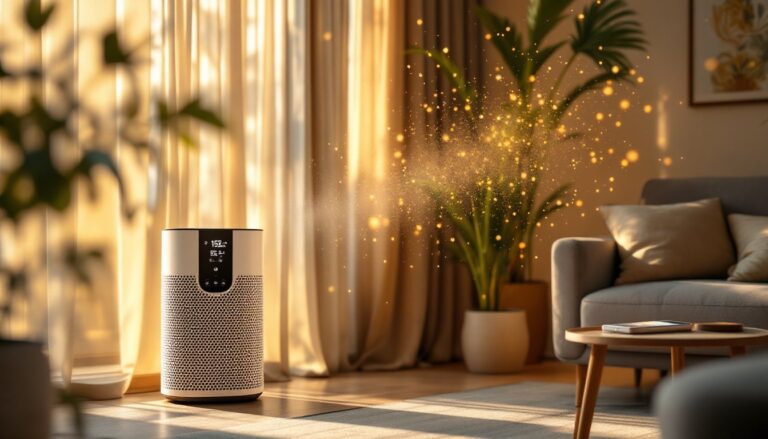
Placement is everything. Position the unit centrally in the room you’re treating, at least 1–2 feet away from walls and furniture. Don’t tuck it in a corner: the purifier needs clear airflow on the intake side. If you’re purifying a bedroom, place it on a dresser or shelf at breathing height rather than on the floor, where it sucks in dust from carpet fibers instead of the air you inhale. Keep it away from moisture (avoid bathrooms) and direct sunlight, which can degrade filters faster.
Run it on a medium or high setting initially, especially when you first use it. Your air is dirtiest on day one, and the unit needs to do heavy lifting. After a week or two, you can drop it to low or medium if noise becomes an issue. Don’t run it at the lowest setting only, it won’t capture enough pollutants to matter.
Monitor the filter visually. Most rental units have a replaceable pre-filter (foam or pleated) on the outside and a true HEPA filter inside. The pre-filter catches large dust: the HEPA layer catches fine particles. If the pre-filter looks clogged or the unit’s air quality sensor indicates poor air flow, notify the rental company, filter replacement is their job. Never try to “clean” a HEPA filter by vacuuming or washing it: you’ll tear the delicate fibers.
Avoid blocking vents. The unit has an intake (usually sides or back) and an exhaust (typically top or front). Don’t place blankets, curtains, or furniture against either side. Blocked intake forces the motor to work harder and shortens the unit’s lifespan, your rental company will charge you if the unit fails due to neglect.
When the rental ends, power it down, unplug it, and wipe the exterior casing with a dry cloth. Leave all filters intact (don’t remove them), and package it carefully if you’re shipping it back. The rental company handles the rest.
Conclusion
Air purifier rentals bridge the gap between wanting cleaner air and committing to a $500+ purchase. They work best for seasonal struggles, temporary relocations, or anyone wanting to test the waters before buying. Know what you’re renting (HEPA filter, room coverage, noise level), do the math against buying, and treat the unit well during the rental term. For most homeowners dealing with allergies or occasional smoke, renting wins. For ongoing air quality battles, ownership eventually makes more financial sense.