



Table of Contents
ToggleCarpet stains, pet accidents, and years of foot traffic don’t have to mean replacing your flooring. A carpet steam cleaner rental offers homeowners an affordable middle ground between store-bought spot cleaners and professional cleaning crews. For most residential projects, whether tackling a staircase, high-traffic hallway, or entire living room, renting a steam cleaner for a day or weekend costs far less than professional services and delivers results comparable to what you’d pay hundreds of dollars for. This guide walks you through how rental steam cleaners work, when renting makes sense, where to find equipment, and how to use it without damaging your carpets.
Key Takeaways
- A carpet steam cleaner rental costs only $40–$80 per day and delivers professional-grade results, making it far more economical than buying a $300–$1,000+ machine for occasional use.
- Steam cleaners use heated water (200°F+) and high-pressure suction (60–100+ PSI) to extract 80–90% of moisture and remove stubborn stains that spot cleaners cannot reach.
- Renting equipment from established chains like Home Depot, Lowe’s, or Sunbelt Rentals eliminates storage concerns and maintenance costs while providing warranty support and basic training.
- Thorough pre-vacuuming, proper trigger control to avoid oversaturation, and strategic ventilation are essential to prevent mold, mildew, and extended drying times after carpet steam cleaning.
- For single-room deep cleans, DIY rental cleaning is most cost-effective; professional cleaning wins for whole-house jobs, and buying only justifies if you need frequent cleaning for multiple properties or heavy pet households.
What Is a Carpet Steam Cleaner and How Does It Work?
A carpet steam cleaner, also called a hot-water extractor, forces heated water mixed with cleaning solution deep into carpet fibers, then immediately sucks the dirty water back up. It’s mechanical and chemical action combined, pressure and detergent break down oils and dirt, while suction pulls it away.
Unlike handheld spot cleaners or shallow shampooing, steam cleaners apply professional-grade pressure (typically 60 to 100+ PSI) that reaches carpet backing and padding beneath the pile. The heating element raises water temperature to 200°F or higher, which helps dissolve stubborn stains better than cold water can.
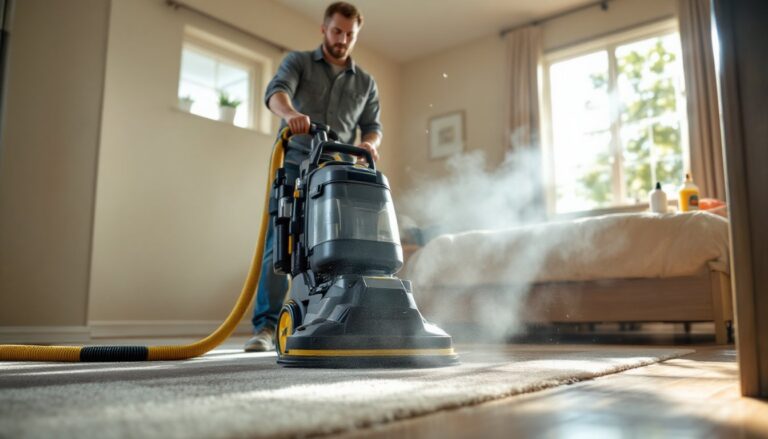
Most rental units have a solution tank (holding pre-mixed cleaning fluid), a clean-water tank, and a dirty-water recovery tank. You fill the clean tank, walk backward slowly over the carpet, trigger the spray, and let the suction mechanism extract moisture. A properly operated rental cleaner can remove 80–90% of moisture, leaving carpets damp but not soaked.
Why Renting Is Smarter Than Buying for Most Homeowners
A decent home-grade steam cleaner costs $300–$1,000 new: commercial-quality units run $2,000–$5,000+. A rental? Typically $40–$80 per day, or $100–$150 for a weekend. Unless you’re cleaning carpets monthly, you’ll pay for a purchase in fewer than five or six annual rental cycles.
Storage is another killer. These machines are bulky, roughly the size of an upright vacuum with a trailing hose and recovery tank. They demand basement or garage space many homeowners don’t have. Renters avoid that burden entirely.
Maintenance and repairs on owned equipment add up too. Hose clogs, heating coil mineral buildup, and motor failures aren’t cheap. Rental companies handle all maintenance and supply replacement units if something breaks.
For one-off deep cleans after a pet incident, pre-sale refresh, or seasonal carpeting refresh, renting is practical economics. Buying makes sense only if you’re cleaning professionally, run a vacation rental, or have multiple carpeted properties you maintain regularly.
Where to Rent Carpet Steam Cleaners Locally
Most equipment rental shops stock steam cleaners alongside power tools and pressure washers. National chains like Home Depot, Lowes, and Sunbelt Rentals carry them, with pickup or delivery available in most metro areas. Local mom-and-pop rental outfits often have inventory too, a quick Google search for “equipment rental near me” turns up options.
Cleaning supply wholesalers sometimes rent as well, and occasionally charge less than big-box retailers. Check your area’s yellow pages equivalent or call a few janitorial supply stores.
Online platforms like Turo (for tool rentals) or regional peer-to-peer rental sites occasionally list steam cleaners, though equipment condition and support vary. Stick with established rental chains if you’re a first-timer, they’ll explain the machine, provide basic training, and stand behind warranty coverage.
Book in advance if you’re targeting a weekend. Spring and early fall see heavy rental demand when homeowners tackle spring cleaning or prepare for house sales.
Step-by-Step Guide to Using a Rental Steam Cleaner
Preparation (before renting)
- Vacuum thoroughly. Remove pet hair, crumbs, and surface debris, the cleaner won’t suck up solids, only moisture. A clogged machine damages rental equipment and wastes your time.
- Move furniture and roll up area rugs. You need clear access and won’t want chairs sitting on damp carpet afterward.
- Spot-treat heavy stains with pre-treatment spray 10–15 minutes before. Let it soak.
Setup and operation
- Fill the clean-water tank with hot tap water and add the recommended amount of cleaning solution (follow the bottle, more isn’t better and can leave residue).
- Plug the machine in and let the heating element warm water to operating temperature (usually 5–10 minutes).
- Start with a small area to test water flow and suction. Trigger the spray and pull the trigger, then release spray and let suction run alone.
- Work in overlapping, slow passes. Move backward, trigger spray, move 6 inches forward, repeat. Speed causes streaks and incomplete extraction.
- After covering the whole room, run a final dry pass with spray off, suction only, to pull residual moisture.
Safety notes
Wear closed-toe shoes (wet carpet and electrical equipment don’t mix). Avoid extension cords over wet areas. Don’t leave the machine running unattended. Test hot water on a hidden carpet corner first to check for dye bleeding (rare but possible on old or cheap dyes).
Cost Comparison: Rental vs. Professional Cleaning vs. DIY
DIY rental steam cleaner: $50–$150 per day plus solution ($10–$20). For a typical 800-sq-ft room, plan 1–2 hours. Total cost: $60–$170.
Professional carpet cleaning: $200–$600+ depending on room size and soiling level. Industry standards run $0.15–$0.50 per square foot for hot-water extraction. According to HomeAdvisor, carpet, though professional crews often charge by area and can handle multiple rooms in one visit.
Buying a home-grade machine: $300–$1,000 upfront, plus solution, maintenance, and storage.
For a single-room deep clean, DIY rental wins. For a whole-house carpet refresh, professional cleaning spreads labor cost over larger square footage and wins economically. Buying only pays off if you need frequent cleaning (heavy pets, kids, rental properties). When selecting a carpet, and understand that steam cleaning is the gold standard for deep extraction.
Pro Tips for Getting the Best Results From Your Rental
1. Acclimate the room first. Close windows and doors 1–2 hours before cleaning. A consistent room temperature (68–72°F) helps the machine’s heating element work efficiently.
2. Pre-vacuum obsessively. Seriously. A second vacuum pass catches fine dust missed the first time. Dirt clogs the cleaner’s spray jets and reduces suction.
3. Don’t oversaturate. New users push the spray trigger hard and drown the carpet. Light trigger control delivers solution and suction together in the right balance. Oversaturated carpet takes 24+ hours to dry and invites mold.
4. Target problem areas strategically. Stains, entry routes, and pet spots get extra passes. But don’t overwork one spot endlessly, multiple slow passes beat one hammering approach.
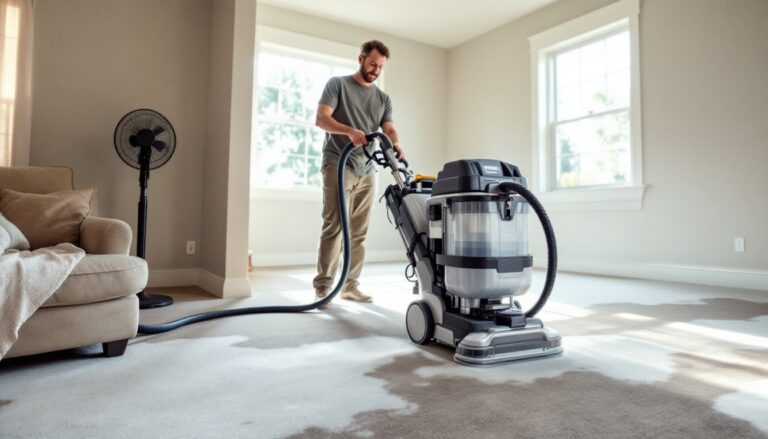
5. Ventilate after cleaning. Open windows, run ceiling fans, and crack interior doors. Air circulation cuts drying time from 12+ hours to 4–6. Fast drying prevents odor and mildew.
6. Empty the recovery tank frequently. A full tank shuts down suction. Empty it every 20–30 minutes during active cleaning.
7. Check the rental agreement. Some companies charge extra if you return the unit with clogged hoses or debris inside. Rinse hoses and tanks before drop-off. Home improvement guides and cleaning resources offer additional tips for extending carpet life between cleanings.
Conclusion
Carpet steam cleaner rentals deliver professional-caliber cleaning at a fraction of professional-service costs, without the equipment purchase and storage burden. They work best for spot emergencies, pre-sale touch-ups, and seasonal deep cleans. Pair smart rental economics with careful prep work and patient operation, and you’ll restore dingy, stained carpets to near-new condition in an afternoon. For most homeowners, renting beats both DIY spot cleaning and buying an expensive machine you’ll use a handful of times.