



Table of Contents
ToggleConstruction sites face real theft and liability risks, and leaving a project unmonitored overnight or during downtime is a gamble most contractors can’t afford to take. Whether you’re managing a residential renovation, commercial build-out, or specialty project, construction security camera rental offers a flexible, cost-effective way to deter theft, document site conditions, and protect your crew’s safety without the long-term investment of purchasing equipment. Unlike permanent installations, rental systems let you scale coverage to match your project timeline, from a few weeks to several months, while gaining 24/7 visibility of what matters most.
Key Takeaways
- Construction security camera rental provides flexible, cost-effective theft deterrence and documentation without long-term equipment investment, scaling easily from weeks to several months based on project timeline.
- Visible camera systems significantly reduce theft rates while providing time-stamped evidence for insurance claims, police investigations, and liability protection in case of disputes.
- Choose between fixed HD/4K cameras for reliable single-point coverage of entrances and material areas, or PTZ cameras for sprawling sites that need remote monitoring flexibility across larger zones.
- Essential features include 40+ feet of night-vision range (infrared), IP65+ weather resistance, motion detection with customizable zones, and remote pan/tilt control for repositioning without calling your provider.
- Prioritize rental providers offering 24/7 customer support, cloud-based footage retrieval for mobile access, and transparent contracts detailing installation, liability, and retention periods before committing to a system.
Why Construction Security Cameras Are Essential for Your Projects
Construction sites are theft magnets. High-value materials, power tools, and equipment sit exposed, often in neighborhoods with limited foot traffic and poor lighting. A visible camera system alone can slash theft rates: many contractors report zero break-ins after deploying cameras, simply because thieves move on to easier targets.
Beyond deterrence, security footage becomes critical evidence if theft or vandalism occurs. Time-stamped video helps police investigations, supports insurance claims, and protects your company’s liability. You can document existing site conditions before work begins and track daily progress, useful for dispute resolution if clients question workmanship or schedule delays.
Safety is another overlooked benefit. Cameras can monitor equipment operation, catch near-misses, and verify that crew members are following protocols. Some rental systems log after-hours activity, alerting managers instantly to unauthorized access. For projects in high-crime areas or those storing hazardous materials, this real-time visibility is invaluable and may even reduce insurance premiums.
Types of Construction Security Cameras Available for Rental
HD and 4K Fixed Cameras
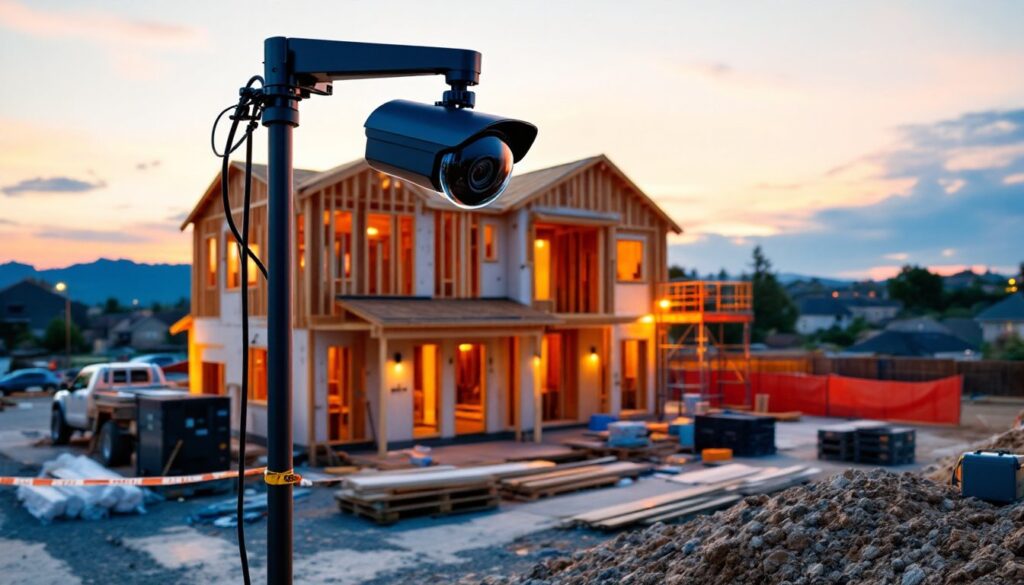
Fixed cameras mount to a single point, typically a pole, wall, or gate, and cover a static field of view. 1080p HD cameras provide clear image quality at a reasonable cost and work well for general site monitoring, entrances, and material storage areas. 4K cameras capture four times the detail of HD, making license plates, faces, and small objects sharply visible from greater distances. They’re ideal for larger sites or when you need forensic-quality footage for potential legal proceedings.
Fixed setups are simple to install, require minimal power (often hardwired or solar-powered), and suffer fewer mechanical failures than moving parts. They excel when you know exactly where trouble is likely, a gate entrance, crane loading zone, or high-value equipment staging area.
PTZ (Pan-Tilt-Zoom) Cameras
PTZ (pan-tilt-zoom) cameras rotate horizontally, tilt vertically, and zoom in on subjects, all via remote control or automation. A single PTZ can cover the area of three or four fixed cameras, making them cost-effective for sprawling sites. Many rental systems let you program patrol routes, so the camera automatically sweeps vulnerable zones throughout the night.
PTZ cameras demand more power and have moving parts prone to wear, so they’re best rented for large projects where their flexibility justifies the extra cost. Wind can degrade accuracy on very tall mounts, and they’re less effective in fog or heavy rain when optics blur. Pair them with fixed cameras for redundancy and reliable coverage during poor weather.
How to Choose the Right Rental Provider for Your Site
Not all rental providers are equal. Start by confirming they service your geographic area and have inventory matching your timeline. A company offering 24/7 customer support matters if a camera fails mid-project: you don’t want to wait until Monday for a fix.
Ask about monitoring options. Some providers offer live-feed monitoring by a central station (guards actively watching), while others supply only recording, you pull footage yourself if needed. Monitored services cost more but provide faster police response and professional incident documentation. For high-risk sites, this is worth the premium.
Reviability of footage is critical. Does the provider store video in the cloud with app-based access, or do you retrieve a hard drive? Cloud storage lets you check footage from your phone, but it requires reliable internet. Hard-drive retrieval is offline-independent but slower. Ask about retention periods, most keep 30 to 90 days of footage before overwriting.
Compare rental terms closely. Some charge daily rates, others weekly, and some offer discounts for longer commitments. Ask whether installation and removal are included, who covers equipment damage, and what your liability is if a camera is stolen. Experienced providers factor these details into transparent contracts: avoid anyone vague on terms. Verify they carry comprehensive insurance and can provide references from similar projects in your region.
Key Features to Look For in Camera Systems
Night vision (infrared LED) is non-negotiable: most theft happens after dark, and you need clear footage when the sun sets. Look for cameras with 40+ feet of effective night-vision range, cheap models blind out beyond 20 feet. Thermal cameras exist but cost significantly more: infrared is the practical standard.
Weather resistance matters on outdoor sites. Cameras should be rated IP65 or higher, dust-proof and water-resistant from any direction. Expect them to function from -10°F to 130°F: extreme climates may limit options. Wipers for dome cameras help in heavy rain, though they add maintenance.
Motion detection cuts storage space and makes reviewing footage faster. When a camera detects motion, it flags the clip and can send an instant alert via email or app. Tune sensitivity carefully to avoid false alarms from wind-blown debris or passing vehicles. Some rental systems let you define motion zones, focusing on gates or equipment areas while ignoring the street.
Audio recording is sometimes available but legally complex. Many jurisdictions require two-party consent to record conversations, so check local laws before enabling it. Many contractors skip audio and rely solely on video to sidestep the headache.
Look for remote pan/tilt control, even on basic systems. You don’t always know what you’ll need to see until the first theft attempt or incident occurs: having the ability to reposition a camera remotely beats calling the rental company.
Installation and Setup Best Practices
Placement is everything. Mount cameras 8 to 12 feet high, high enough to avoid tampering, low enough to capture useful face-level detail. Aim them at site entries, gates, crane positions, and material staging areas. Avoid pointing directly into bright lights or the setting sun: glare washes out footage. Angle downward 20 to 30 degrees rather than straight-on for better license-plate clarity.
Use power sources strategically. Hardwired 110V connections are most reliable: solar backup units work in sunny regions but perform poorly in winter or rainy climates. Battery-powered cameras are portable but deplete quickly, useful for short-term coverage only. Confirm the rental includes power cables, outlet adapters, and weatherproof junction boxes. Run cables through conduit or hide them behind structure to prevent tampering.
Secure the equipment itself. Use cable locks or steel brackets rated for outdoor use. Mark the system with your company name and contact info, thieves often steal cameras, ironically. Back up footage daily to cloud storage or external hard drives: a single equipment theft shouldn’t mean total evidence loss.
Test the system before assuming it works. Walk in front of cameras at various distances and times of day, then review playback quality. Check that night vision activates, motion alerts arrive on your phone, and audio (if enabled) is clear. Poor initial setup often means discovering problems after the first incident.
Providers typically handle professional installation, but confirm this upfront. DIY installation saves money but risks coverage gaps or poor image quality. If you install it yourself, refer to the manual carefully and test before signing off with the rental company. They may charge you for repositioning a poorly placed camera later, so get it right the first time.